When AI models talk about your brand, they do not just make things up. They look at evidence. And one of the most influential types of evidence is your review scores on third-party platforms.
Trustpilot, G2, Google Reviews, Capterra, BBB, Yelp. These are the platforms AI models reference when someone asks "Is [your brand] any good?" or "What do customers think about [your brand]?" If your scores are low on these platforms, that is what AI will tell users.
This is not speculation. AI tools like ChatGPT and Gemini cite specific review platforms in their answers. Your review presence directly shapes how AI talks about your brand.
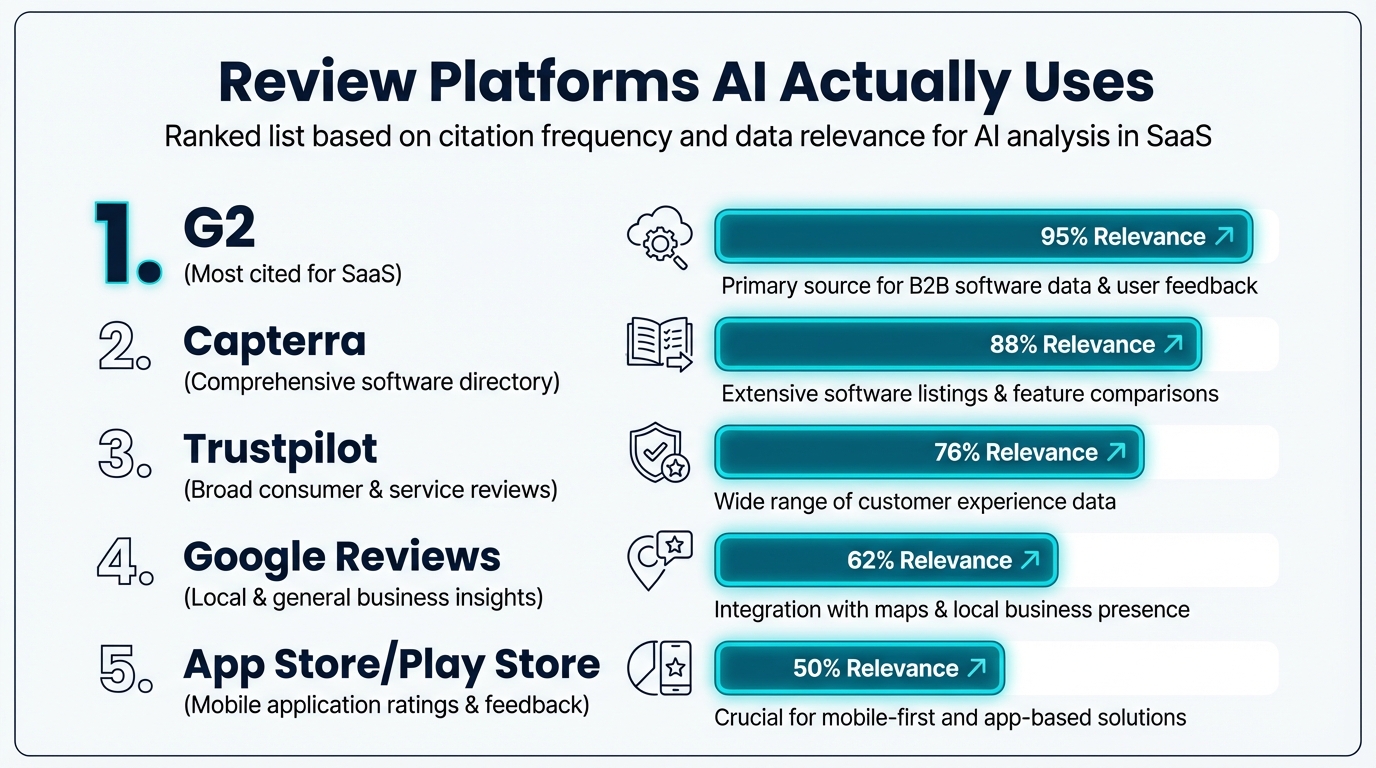
Which Review Platforms AI Models Actually Use
Different AI tools rely on different review ecosystems, but some platforms show up consistently:
High-impact platforms (cited most often):
- Google Reviews (via Google Business Profile)
- Trustpilot
- G2 (B2B software)
- Capterra (B2B software)
- BBB (Better Business Bureau)
Secondary platforms (cited regularly):
- Yelp (local businesses)
- Amazon reviews (products)
- App Store / Google Play reviews (apps)
- Industry-specific platforms (TripAdvisor for hospitality, Glassdoor for employers)
The platforms that matter most depend on your industry, but Google Reviews and Trustpilot are nearly universal.
How Review Scores Affect AI Sentiment
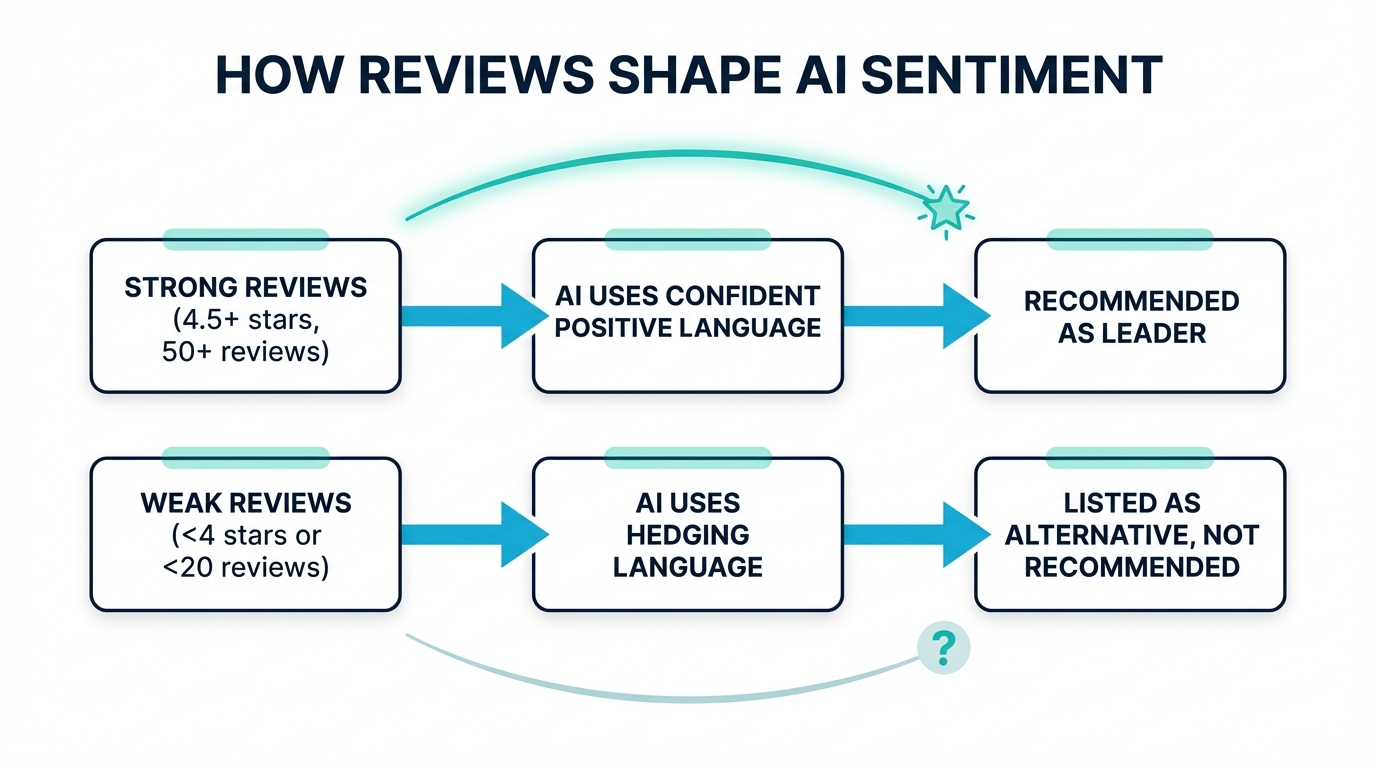
AI models don't just look at your star rating. They analyze the content of reviews to understand the themes. Here is what they pick up on:
- Overall star rating. A 3.2 on Trustpilot sends a very different signal than a 4.5. AI models use this as a baseline.
- Review themes. If multiple reviews mention slow shipping, poor customer support, or product quality issues, AI models detect those patterns and reflect them in answers.
- Recency. Recent reviews carry more weight. A brand that had problems two years ago but has improved since then still suffers if the recent reviews have not caught up.
- Response patterns. Some AI models factor in whether a brand responds to negative reviews. A brand that actively addresses complaints signals better customer care.
Provider-Specific Strategies
ChatGPT (Bing-Indexed Reviews)
ChatGPT synthesizes review sentiment from Bing search results. The review platforms that Bing indexes and surfaces for your brand name are teh ones that matter most.
- Focus on Bing-indexed review platforms. Trustpilot, G2, and BBB tend to rank well on Bing. Prioritize improving your scores on these platforms.
- Check what Bing surfaces. Search your brand name + "reviews" on Bing. The top results are what ChatGPT sees. If a low-rated platform ranks first, that is your priority.
- Use Bing Webmaster Tools to monitor. Track which review-related pages rank for your brand queries on Bing.
Gemini (Google Reviews Ecosystem)
Gemini weighs Google's own review ecosystem heavily, including Google Business Profile reviews, Google Maps ratings, adn Google Shopping reviews.
- Prioritize Google Business Profile reviews. This is Gemini's primary review source. Actively solicit reviews from satisfied customers and respond to every negative review professionally.
- Maintain your Google Knowledge Panel. A complete, accurate Knowledge Panel with positive review signals reinforces good sentiment.
- Focus on E-E-A-T review signals. Gemini values reviews on platforms that demonstrate expertise and trustworthiness. Niche industry review sites with editorial standards carry more weight than generic platforms.
Claude (Web Search)
Claude now searches the web in real-time, wich means it finds and cites review platforms just like ChatGPT and Gemini do.
Your review scores on platforms that rank well in web search directly affect what Claude says.
- Focus on review platforms that rank well. Trustpilot, G2, and Google Reviews tend to rank highly in web search results. Claude will find and cite these when users ask about your brand.
- Keep reviews fresh and positive. Since Claude searches live, recent reviews matter more than historical ones. A steady flow of new positive reviews improves what Claude finds right now.
- Respond to negative reviews. Claude can see your responses to reviews in search results. Professional, constructive responses signal good customer care.
Perplexity (Live Crawling)
Perplexity crawls review platforms directly and tends to cite the most recent data it can find.
- Keep reviews fresh. Perplexity favors recently updated content. A steady flow of new positive reviews signals an improving brand.
- Respond to negative reviews publicly. Perplexity may crawl your responses to reviews. Professional, helpful responses demonstrate good customer care.
How to Improve Your Review Scores
The fundamentals apply across all platforms:
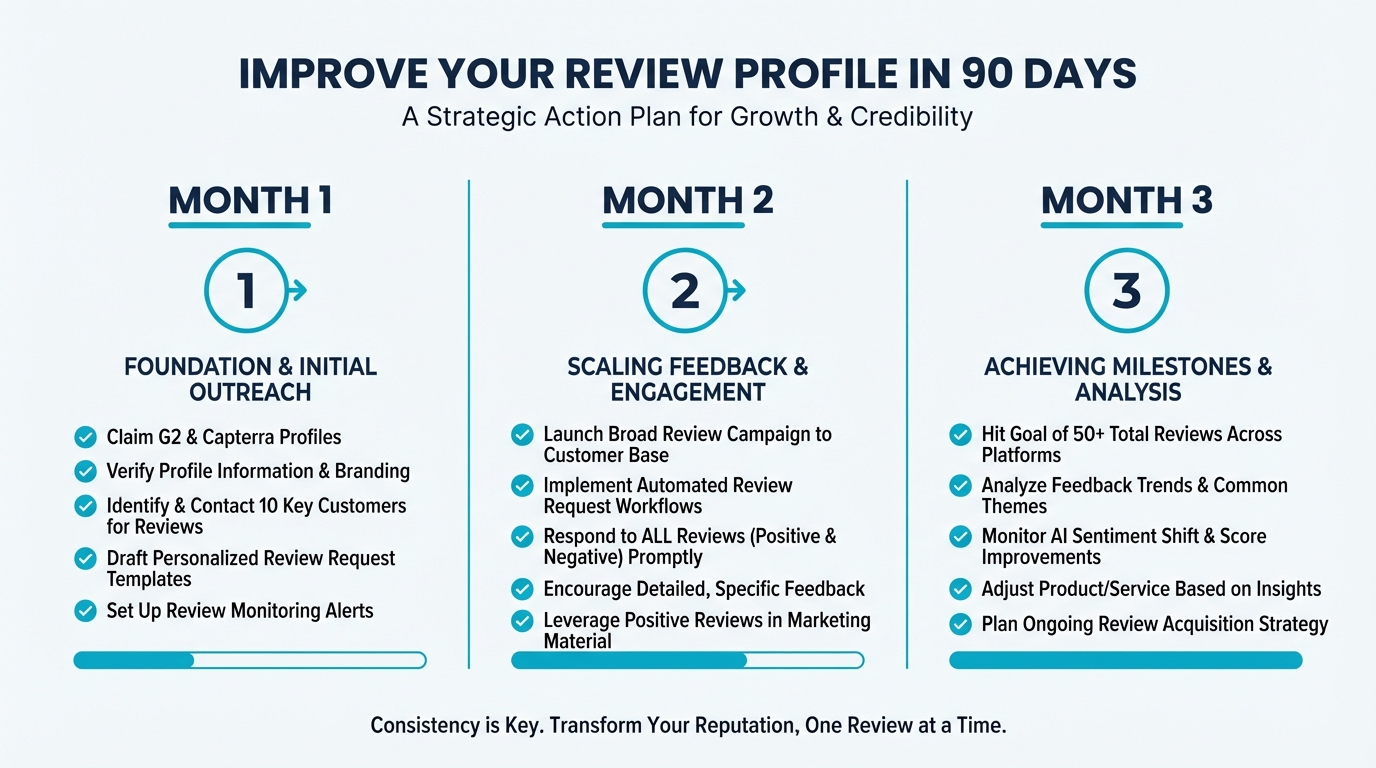
- Ask satisfied customers to leave reviews. Most happy customers do not think to leave reviews unless prompted. Build review requests into your post-purchase or post-service flow.
- Make it easy. Direct links to your review profiles reduce friction. The fewer clicks it takes, the more reviews you will get.
- Respond to every negative review. A thoughtful, professional response to criticism can turn a negative signal into a positive one. It shows prospective customers (and AI models) that you care.
- Address systemic issues. If the same complaint appears repeatedly, fix the underlying problem. No amount of review management can overcome a genuine product or service issue.
- Never fake reviews. AI models are surprisingly good at detecting inauthentic patterns, and review platforms will penalize you for it. Build genuine positive reviews over time.
The Bigger Picture
Review scores are one of three levers that affect how AI talks about your brand. The other two are the content that ranks for your brand queries and your overall brand reputation across the web. Improving all three gives you the strongest AI sentiment.
To track how review sentiment flows into AI responses over time, see our guide on tracking AI sentiment changes.
If AI cannot find your brand at all, start with the basics: getting into AI search results and building brand authority.