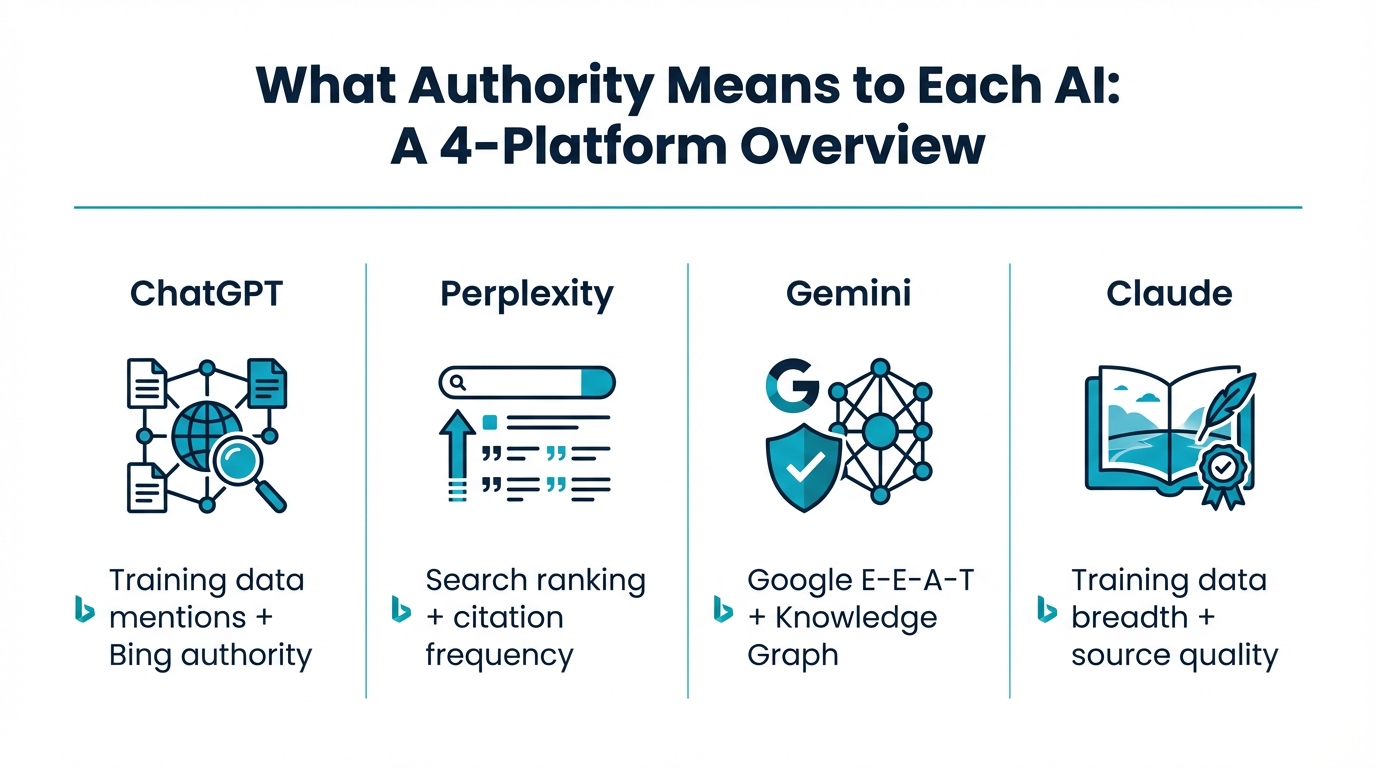
There is a fundamental problem that no amount of SEO or PR can fully solve on its own. If AI platforms do not understand what your brand is, who it serves, and why it matters, they will treat it as background noise.
This goes beyond showing up in search results or getting mentioned in articles. It is about whether AI models see your brand as a distinct, authoritative entity in your space. The difference between being recognized and being ignored often comes down to how clearly your brand identity is established across the web. If the name is ambiguous, start with the brand disambiguation checklist before adding more authority content.
What "Brand Authority" Means to an AI
Humans understand brand authority intuitively. You know Nike is an athletic brand. You know Salesforce does CRM. That understanding comes from years of exposure, context, and cultural knowledge.
AI models don't have that intuition. They build there understanding of a brand from structured signals scattered across the internet. When those signals are strong and consistent, the AI "gets it." When they are weak or contradictory, the AI either ignores your brand or confuses it with something else.
The signals that matter most:
- Consistent naming. Does your brand appear the same way everywhere?
- Clear categorization. Can the AI determine what industry you are in and what you sell?
- Entity distinction. Can the AI tell your brand apart from other things with similar names?
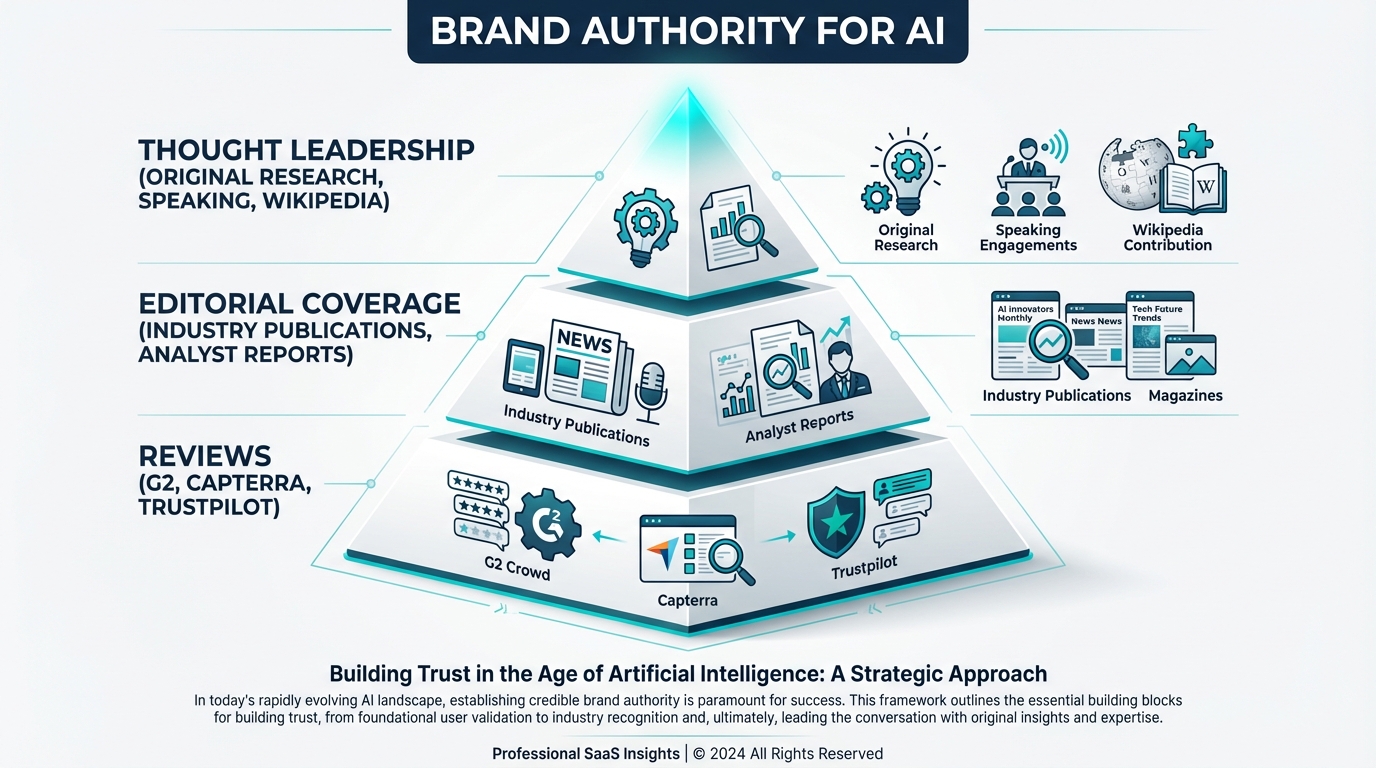
- Authority indicators. Do credible sources validate your brand's expertise?
Foundation First: Verify Your Entity Before Building Authority
Authority signals only compound when AI already knows who you are. Before investing in reviews, press coverage, and editorial mentions, verify your Knowledge Graph presence. A brand with 100 G2 reviews but no Wikidata entry and no Organization schema is building on sand. The reviews help, but AI can't confidently attribute them to the right entity.
Check your foundation: Does your brand appear in Google's Knowledge Graph? Do you have a Wikidata entry? Is your Organization schema complete with sameAs links? Is your Google Business Profile verified?
If the answer to any of these is no, start there. See our guide on Entity SEO for AI for the complete entity signal stack.
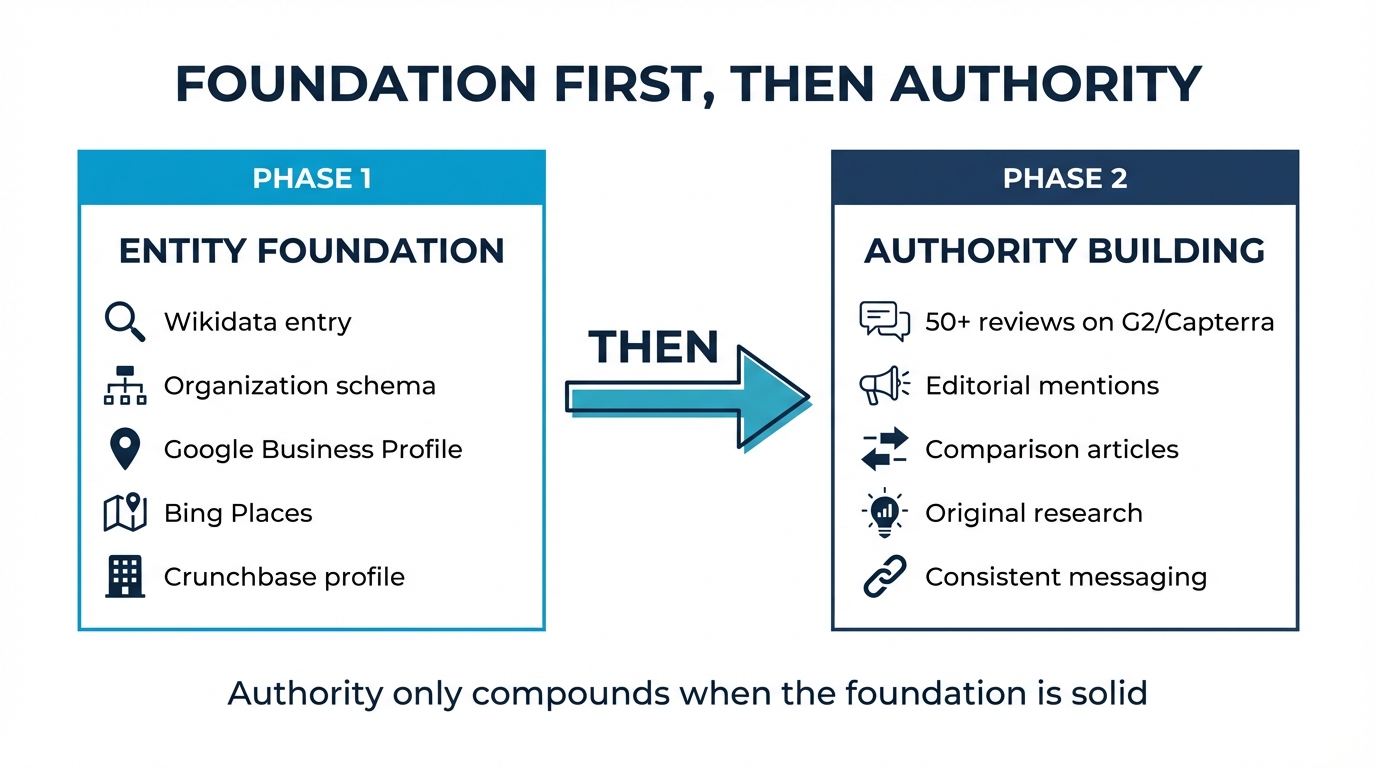
Once the foundation is solid, authority signals compound rapidly. Here's how to build them.
How to Build Authority Across All AI Platforms
Establish a Clear Brand Entity
The first step is making sure AI can identify your brand as a distinct entity, not just a word that appears in text.
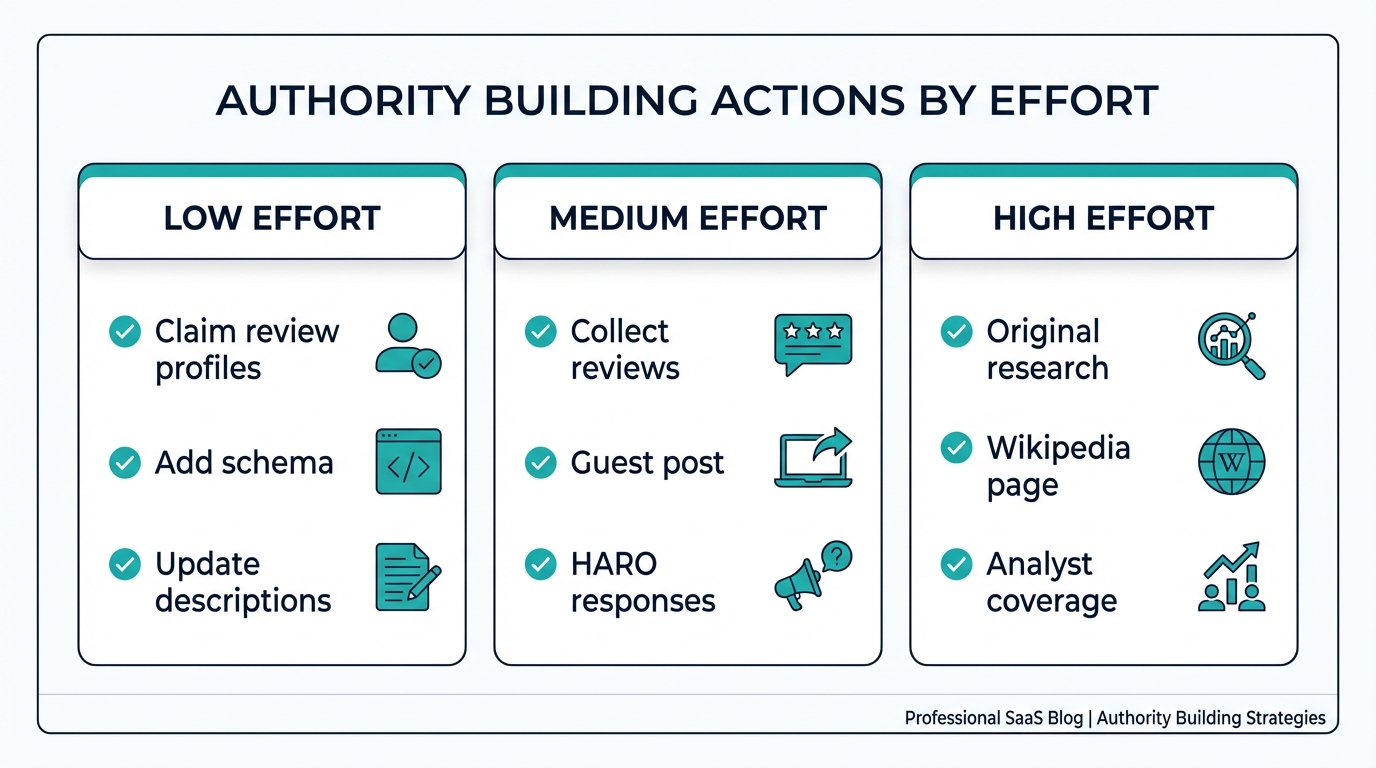
- Create a comprehensive About page with structured data. Use Organization schema markup with your official name, description, logo, founding date, and industry. This gives AI a machine-readable identity card for your brand.
- Maintain a consistent brand name everywhere. If your company is "Friction AI," do not call it "FrictionAI" on LinkedIn, "Friction" on X, and "Friction AI Inc." in press releases. Pick one and stick with it.
- Claim your brand on knowledge bases. Wikidata, Crunchbase, and Google's Knowledge Graph all serve as reference points for AI models. Make sure your brand has accurate, complete entries on each.
Build a Wikipedia Presence (If Eligible)
Wikipedia is one of the most influential sources for AI training data and knowledge retrieval. A Wikipedia page about your brand, or even a mention within a relevant article, carries enormous weight.
- Check if your brand meets Wikipedia's notability guidelines. You need significant coverage in reliable, independent sources. If you have that, a Wikipedia article is worth pursuing.
- If a standalone page is not viable, aim for mentions. Getting your brand mentioned in relevant industry or category articles on Wikipedia still helps AI models connect your brand to your space.
- Never edit Wikipedia articles about your own brand. Wikipedia has strict conflict of interest policies. Work with an experienced Wikipedia editor or focus on earning the third-party coverage that makes a Wikipedia entry natural.
Strengthen Author and Expert Signals
AI models, especially those using Google Search, evaluate expertise at the author level and not just the domain level. The people behind your brand matter.
- Create detailed author pages for your team's content. Include credentials, experience, and links to other published work. Google's E-E-A-T guidelines evaluate who is writing, not just what is written.
- Get your experts quoted in industry publications. When your CEO or CTO is cited as an expert source in trade media, that builds both personal and brand authority.
- Publish original research. Data, surveys, and analysis that others cite create a web of authority signals that AI models pick up on. Original research also attracts backlinks from other publications.
Maintain Consistent Structured Data
Structured data is the language that helps machines understand your brand. It is not glamorous, but it is one of the highest-impact things you can do for AI visiblity.
- Implement Organization schema on your homepage. Include
name,url,logo,description,sameAs(links to your social profiles), andfoundingDate. - Add Product or Service schema to relevant pages. Help AI understand what you actually sell, with prices, ratings, and availability where applicable.
- Use FAQ schema for common questions. This directly feeds AI models that pull from structured data, especially Google AI Overview.
- Keep your schema consistent with your other brand signals. The name in your schema should match your Wikipedia entry, your Crunchbase profile, and your Google Business Profile.
Build Cross-Platform Consistency
AI models triangulate information from multiple sources.
The more consistant your brand appears across the web, the more confident the AI is in presenting it as a real, established entity.
- Audit your brand presence across platforms. Check Google Business Profile, Bing Places, Crunchbase, LinkedIn, industry directories, and social platforms. Is the information consistent?
- Fix discrepancies. Different addresses, different descriptions, different category labels. These small inconsistencies add up and create doubt for AI models trying to verify your identity.
- Link everything together. Use
sameAsin your structured data to connect your official profiles. This helps AI understand that all these profiles represent the same entity.
What Comes Next
Brand authority does not exist in isolation. It works together with search visibility (making sure AI can find you) and third-party source coverage (making sure others vouch for you). The strongest AI presence comes from all three working together.