When someone asks ChatGPT, Gemini, or Perplexity about your brand, those tools search the web before answering. They pull up articles, forum posts, reviews, and whatever else ranks for your brand name. Then they summarize what they find.
If the top results for your brand are complaints, controversies, or outdated negative coverage, that is exactly what AI will parrot back to the user. The AI is not forming its own opinion. It is reflecting what the web says about you.
The fix is not about suppressing negative content. It is about creating and ranking enough positive, high-quality content that AI models get a more accurate and balanced picture of your brand.
Why AI Amplifies Negative Content
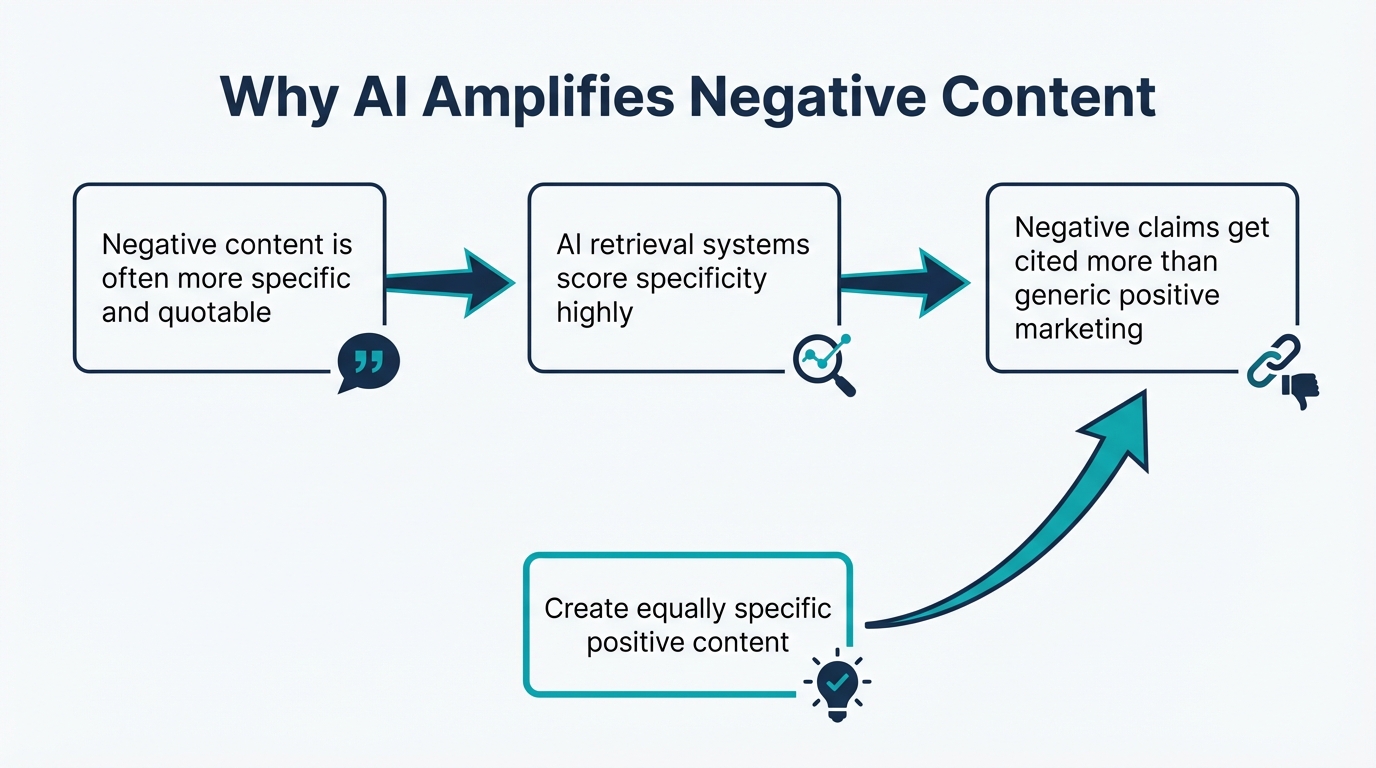
Search engines have a negativity bias when it comes to brand queries. News articles about scandals, complaint forum threads, and one-star reviews tend to attract more backlinks and engagement than positive coverage. That means they rank higher. And since AI tools pull from search results, they inherit that bias.
This creates a feedback loop: negative content ranks, AI cites it, users see it, which drives more clicks to the negative content, which keeps it ranking.
Breaking this cycle requires a deliberate content strategy.
ChatGPT (Powered by Bing)
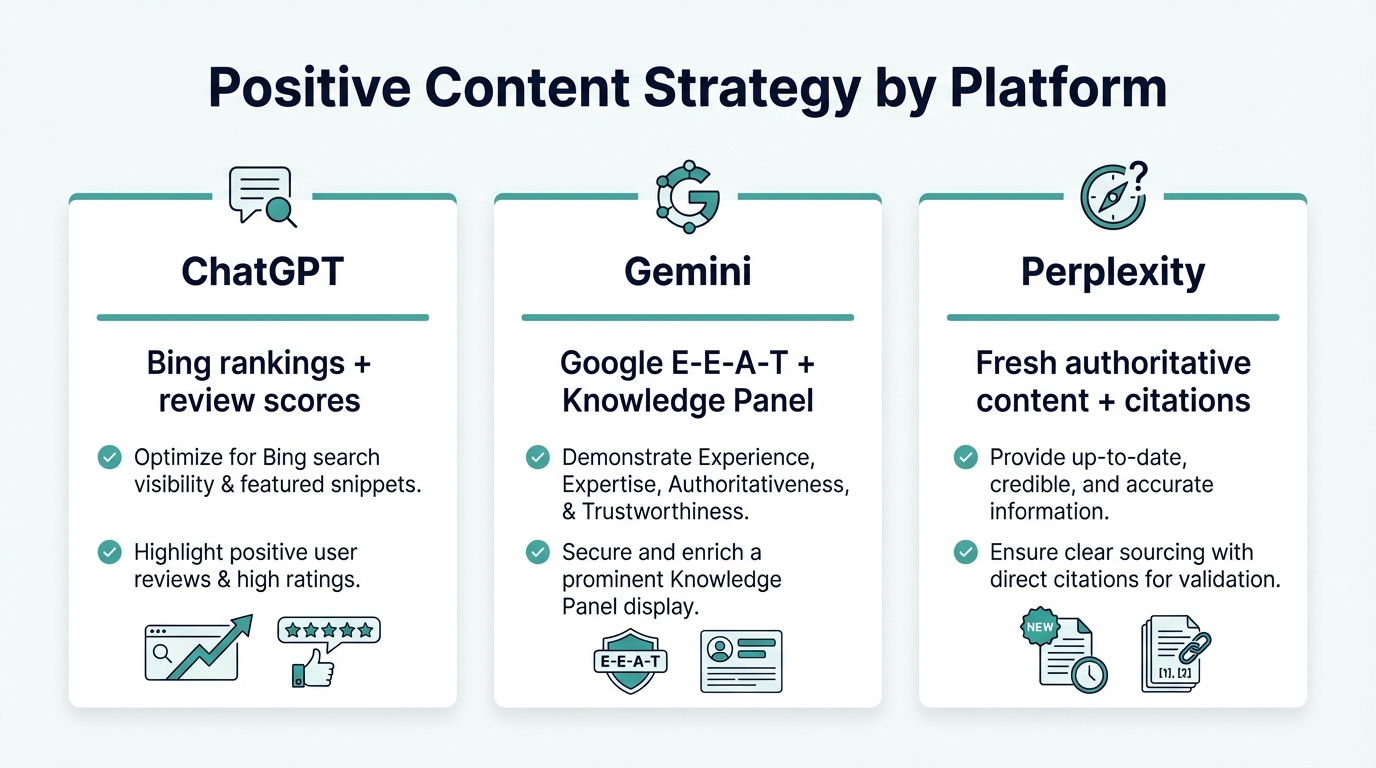
ChatGPT pulls from Bing search results. If negative content about your brand ranks on Bing, ChatGPT will reference it.
What to do:
- Audit your Bing results for brand queries. Search your brand name on Bing and note what comes up. The top 10 results are what ChatGPT sees.
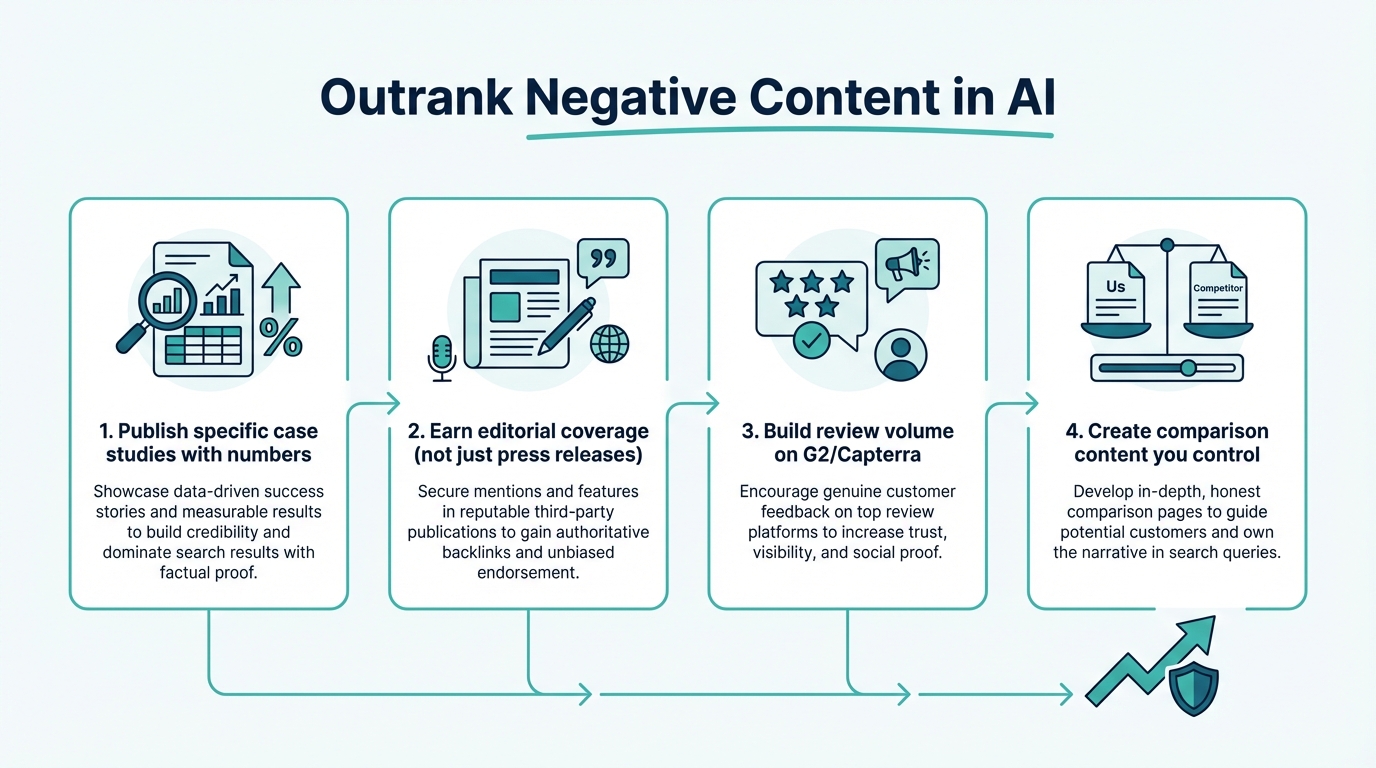
- Publish positive content on Bing-friendly domains. Bing values domain authority, social signals, and exact-match keywords. Publish brand stories, case studies, and customer success content on high-authority sites that Bing indexes well.
- Optimize your own site for brand queries. Your homepage, About page, and press/news section should rank #1 on Bing for your brand name. Use Bing Webmaster Tools to check and improve your rankings.
- Create branded content hubs. Dedicate pages on your site to topics where negative content currently ranks. A well-structured FAQ addressing common concerns can outrank complaint threads over time.
Gemini (Powered by Google Search)
Gemini uses Google Search, where E-E-A-T signals heavily influence which content gets cited. Negative content from authoritative sources (news outlets, major review sites) is particularly sticky in Google results.
What to do:
- Build E-E-A-T on your positive content. Author bylines with credentials, expert quotes, and links to authoritative sources help your positive content compete with negative press.
- Claim and optimize your Google Business Profile. The Knowledge Panel and Business Profile are prime real estate in Google results. Keep them updated with positive imagery, accurate info, and responses to reviews.
- Publish thought leadership content. Op-eds, research reports, and expert commentary on industry topics build your brand's positive presence in Google. Gemini favors content with strong expertise signals.
- Target informational queries about your brand. If people search "[your brand] problems" or "[your brand] complaints," create honest, transparent content that addresses those concerns directly. Ranking your own response is better than letting third parties control the narrative.
Google AI Overview (Google Search AI Summaries)
Google AI Overview synthesizes answers from top-ranking Google results. If negative content dominates those results, the AI summary will reflect that negativity.
What to do:
- Create content structured for featured snippets. AI Overviews pull from snippet-eligible content. Structure your positive brand content with clear headings, direct answers, and FAQ structured data.
- Address negative topics proactively. If there is a common complaint about your brand, publish a clear, transparent page that addresses it. AI Overviews often pull from pages that directly answer the question being asked.
- Use structured data. Schema.org markup (Organization, Product, FAQ) helps Google understand the context of your content and can influence how AI Overviews frame your brand.
Claude (Web Search)
Claude now searches the web in real-time, which means the content that currently ranks for your brand name directly affects what Claude tells users. If negative articles, complaint threads, or unfavorable coverage rank highly, Claude will find and reference them.
What to do:
- Rank positive content for your brand queries. Since Claude searches the web live, the same content strategy that works for ChatGPT and Gemini applies here. Focus on ranking positive, high-quality content for your brand name and related terms.
- Get positive coverage in major publications. Press coverage in outlets like Reuters, industry journals, and established blogs ranks well in web search and carries authority.
- Update your Wikipedia presence. Wikipedia pages rank highly in web search results. If your brand has a Wikipedia page, ensure it accurately reflects recent positive developments.
- Publish fresh, authoritative content regularly. Blog posts, case studies, and press releases that address your brand positively help push negative content down in search results that Claude uses.
Perplexity (Independent Web Crawler)
Perplexity crawls the web independently and tends to favor fresh, frequently updated content on authoritative domains.
What to do:
- Publish positive content regularly. Perplexity's crawler prioritizes recently updated pages. A steady cadence of positive brand content (blog posts, case studies, press releases) helps push older negative content down.
- Keep your site content fresh. Update key pages like your About page, product pages, and testimonials section regularly to signal relevance.
- Focus on authoritative domains. Guest posts and mentions on well-established industry sites carry more weight with Perplexity than content on smaller or newer domains.
The Bigger Picture
Ranking positive content is one piece of the sentiment puzzle. AI models also look at your review scores on the platforms they cite and your overall brand reputation when forming an opinion. And if AI cannot find your brand at all, start with our guide on getting into AI search results.
Related Articles
- How to Fix Negative AI Brand Sentiment (Step-by-Step)
- Your Review Scores Are Shaping What AI Says About Your Brand
- How to Control What AI Says About Your Brand