When someone asks an AI tool "what is the best project management software?" or "which running shoes are best for flat feet?", the AI does not just search the web and pick the first result. It looks for comparison articles, roundup lists, and review platforms that evaluate multiple options side by side.
These "best of" articles and review platforms are where AI forms its purchase opinions. Wirecutter, CNET, G2, Capterra, Tom's Guide, and similar sites carry massive weight in AI purchase recommendations because they provide exactly the kind of structured, comparative evaluation that AI needs to make a recommendation.
If your brand is absent from these comparison sources, AI has no third-party validation to back up a recommendation. It will recommend the brands that are featured instead.
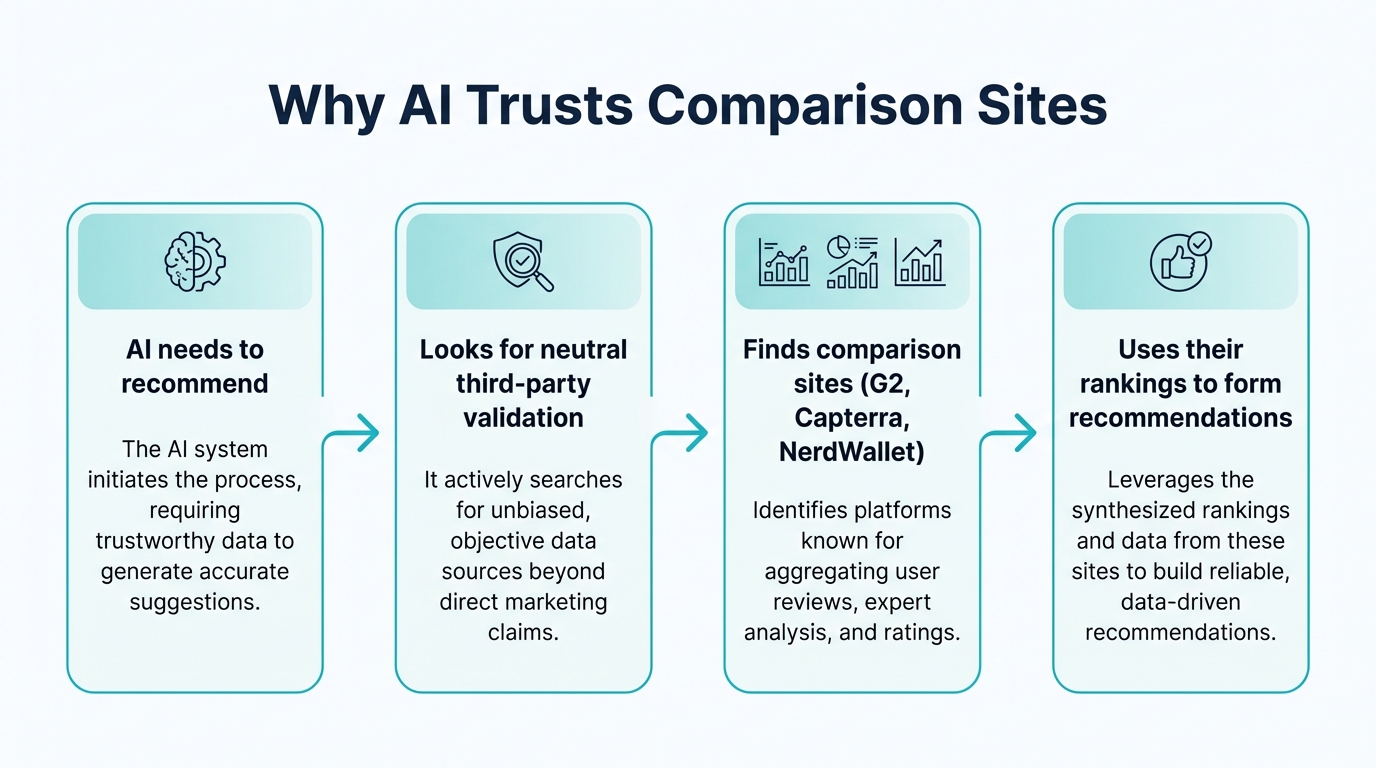
Why AI Trusts Comparison Sites Over Your Product Page
Your product page says your product is great. Every product page says that. AI knows this.
Comparison sites provide what your product page cannot: independent, side-by-side evaluation. When Wirecutter says your product is the best in its category, that carries more weight with AI than anything on your own domain. AI models have learned from their training data that third-party comparisons are more reliable than first-party marketing claims.
This is the same pattern that drives third-party source importance across all AI metrics, but it is especially critical for purchase intent because buying decisions depend on comparative evaluation.
Which Comparison Sites Matter Most
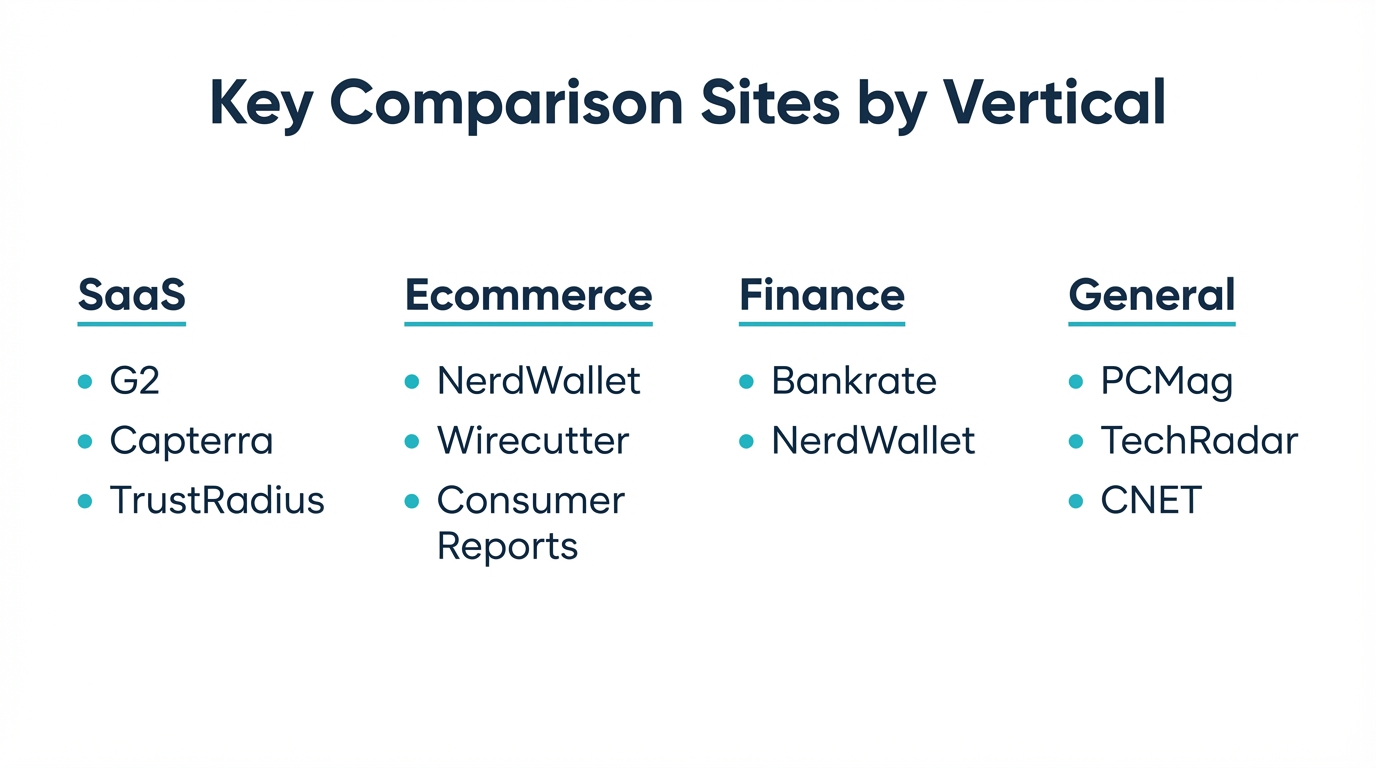
The sites that matter depend on your industry, but some platforms consistently appear in AI purchase recommendations:
Consumer Products:
- Wirecutter (New York Times)
- CNET
- Tom's Guide
- Consumer Reports
- Good Housekeeping
- Reviewed (USA Today)
B2B Software:
- G2
- Capterra
- TrustRadius
- Software Advice
- GetApp
General:
- Reddit recommendation threads (AI frequently cites Reddit)
- Industry-specific review sites and trade publications
- Amazon reviews and product listings (for physical products)
How to Get Featured on Comparison Sites
Consumer Review Sites (Wirecutter, CNET, Tom's Guide)
These sites have editorial teams that independently test adn evaluate products. You can't pay for placement, but you can increase your chances of being included.
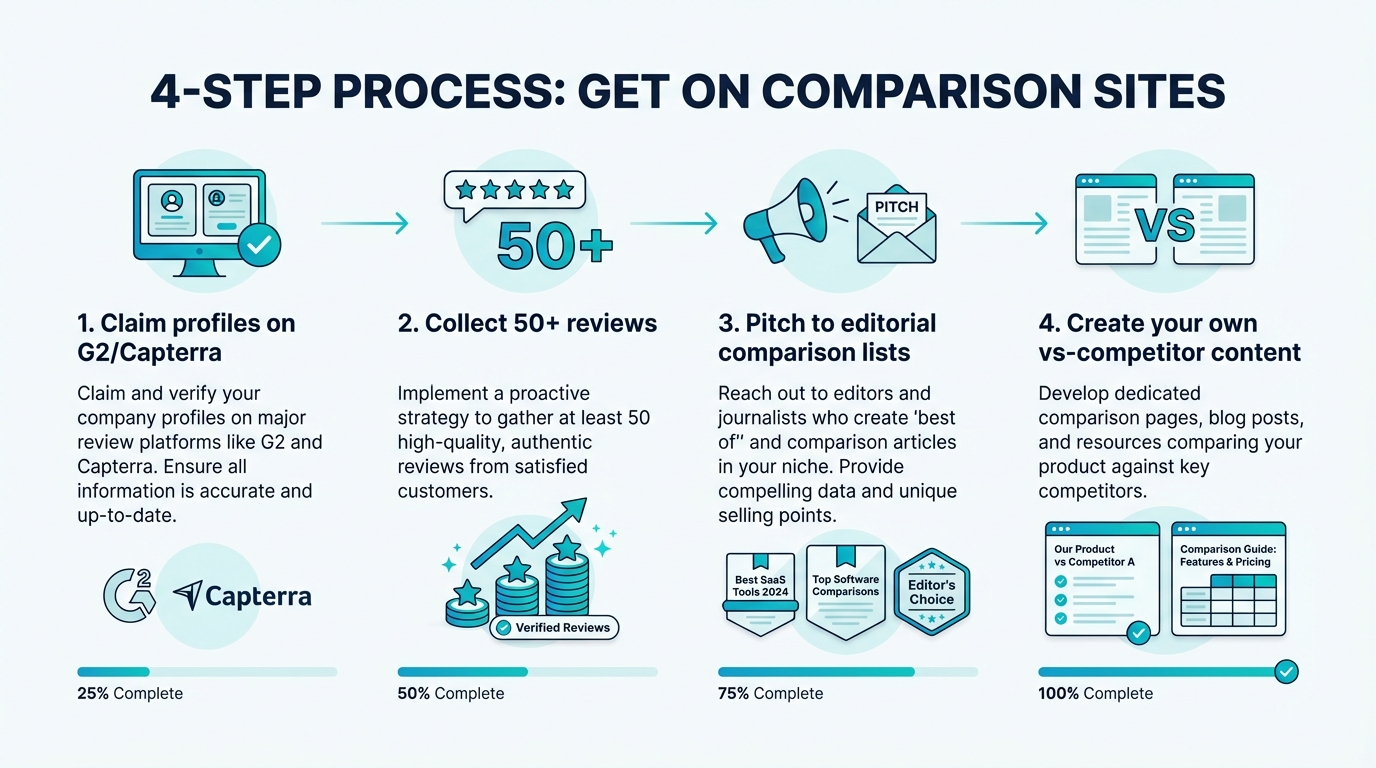
- Submit your product for review. Most major review sites accept product submissions. Find the submission process on their website or reach out to the editorial team directly. Include detailed specs, pricing, and what makes your product different.
- Send review samples. For physical products, offer to send units for hands-on testing. Make it easy for reviewers to evaluate your product.
- Time your outreach around updates. Review sites update their "best of" lists regularly. Reach out when your product has a major update, new model, or price change. This gives them a reason to re-evaluate the category and potentially include you.
- Build a track record. Smaller, niche review sites are easier to get on first. Coverage from several smaller sites builds credibility that makes larger sites more likely to take notice.
B2B Review Platforms (G2, Capterra, TrustRadius)
Unlike consumer review sites, B2B platforms are driven by user reviews.
Getting listed is easier, but building a strong profile takes effort.
- Claim and complete your profile. G2, Capterra, and TrustRadius let you create free vendor profiles. Fill out every field: descriptions, screenshots, feature lists, integrations, pricing.
- Actively collect reviews. Most happy customers will not leave a review unless asked. Build review collection into your customer success workflow. Send review requests after positive support interactions, successful onboarding, or contract renewals.
- Respond to every review. Both positive and negative. This shows active engagement and helps your profile rank higher within the platform. AI models also pick up on response patterns.
- Compete in category reports. G2 publishes quarterly Grid Reports. Capterra has Shortlist reports. Getting into these reports puts you in the comparison lists that AI models reference.
"Best Of" Roundup Articles
Independent bloggers adn niche publications publish comparison articles that AI frequently cites.
- Search for your category's roundup articles. Google "[your category] best 2026" and "best [your product type] for [use case]". The articles that rank are the ones AI sees.
- Contact the authors. Many roundup articles are updated regularly. Reach out to the author with a short pitch explaining why your product should be included. Provide a free trial or demo access to make evaluation easy.
- Create your own comparison content. Publish honest "us vs. competitors" articles on your blog. When AI searches for comparisons, these pages can rank alongside third-party articles.
Provider-Specific Notes
- ChatGPT cites comparison sites that Bing indexes. Check which comparison articles rank for your category on Bing, not just Google.
- Gemini and Google AI Overview lean heavily on Google's organic results. Comparison articles with strong E-E-A-T signals rank higher and get cited more often.
- Claude searches the web broadly. Coverage across multiple comparison sites matters more than ranking on one.
- Perplexity crawls independently and tends to cite the most recently updated comparison articles.
What Comes Next
Getting on comparison sites works alongside two other levers: making sure your product content appears in AI search results directly and building the commerce authority signals that make AI trust your brand as a real purchase option.